How AI Overviews Affect SEO Traffic
Google AI Overviews can reduce organic SEO traffic because users may receive answers directly in the search results without visiting a website. However, websites cited inside AI Overviews can gain additional search visibility. Businesses should now measure SEO using organic traffic, CTR, conversions, AI visibility, local performance, and branded demand rather than rankings alone. Summary: AI Overviews can lower organic click-through rates, particularly for informational queries where users...
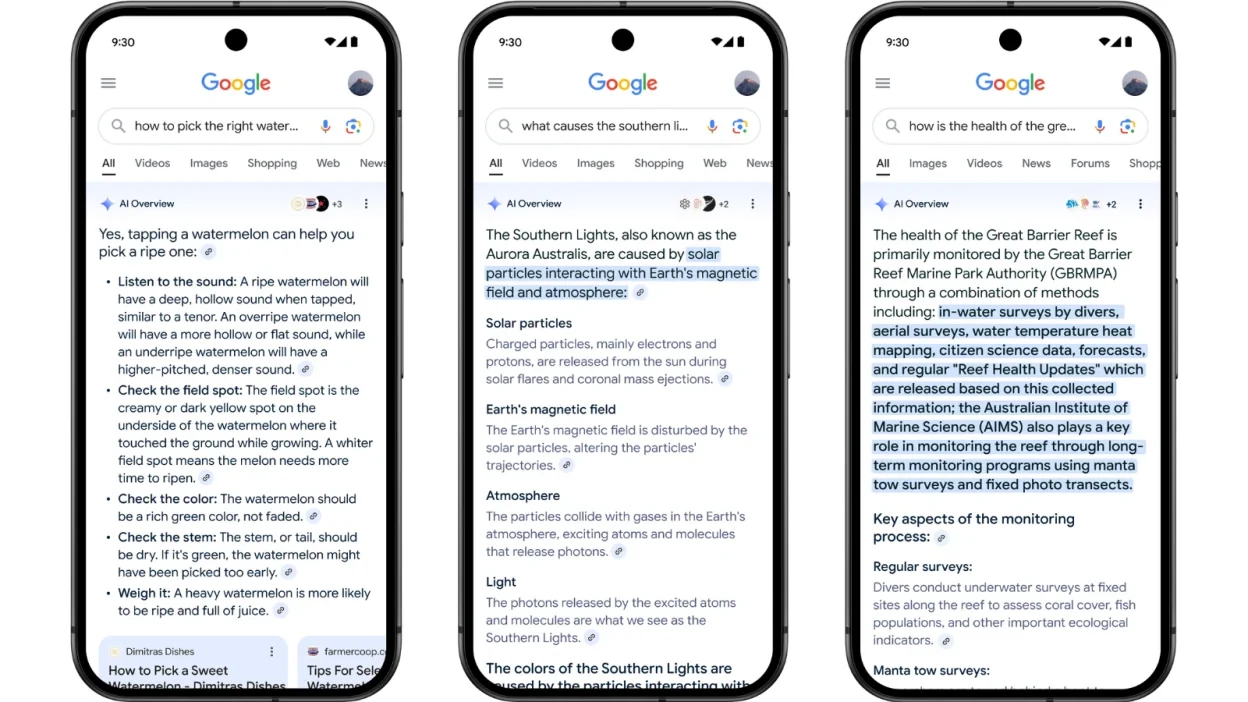
Google AI Overviews can reduce organic SEO traffic because users may receive answers directly in the search results without visiting a website. However, websites cited inside AI Overviews can gain additional search visibility. Businesses should now measure SEO using organic traffic, CTR, conversions, AI visibility, local performance, and branded demand rather than rankings alone.
Get Free SEO Audit
Summary:
AI Overviews can lower organic click-through rates, particularly for informational queries where users can get answers directly from Google.
Strong rankings still matter, but AI citations are becoming another important form of search visibility, especially as Google expands generative AI across more query types.
SEO measurement needs to evolve to include CTR, conversions, generative AI impressions, Google Business Profile activity, reviews, local SEO performance, and traditional rankings.
Google search results no longer look the way they did a few years ago. For many searches, users now see an AI-generated answer before they reach the traditional organic results.
These answers are called Google AI Overviews.
For businesses that depend on SEO traffic, this creates an important change. Ranking near the top of Google can still give your business valuable visibility, but a high ranking does not always produce the same number of website clicks it once did.
AI Overviews can answer part or all of a user's question directly on the search results page. That means someone may get the information they need without visiting a website. At the same time, Google includes links and citations inside AI Overviews, which creates a different type of search visibility for websites that are selected as sources.
The result is not that SEO has stopped working. The bigger change is that businesses need to look beyond rankings alone and understand impressions, click-through rates, AI citations, branded searches, local visibility, and conversions.
What are Google AI Overviews?
Google AI Overviews are AI-generated summaries that appear for some search queries.
They collect and organize information related to the user's question and can include links to websites that support the response. Google describes AI Overviews as part of its generative AI search experience, alongside AI Mode.
A user might search something like:
"How often should air ducts be cleaned?"
Instead of seeing only a list of website links, the user may first see an AI-generated explanation that summarizes several points related to the question.
Google can then show links to sources within or around that response.
For businesses, this creates two possible outcomes.
Your website could receive fewer clicks because the answer is already visible on Google.
Or your website could gain additional visibility if Google uses your content as one of the sources supporting the AI Overview.
Both can happen at the same time.
Do AI Overviews reduce organic SEO traffic?
They can, especially for informational searches.
Several studies have found that search results containing AI Overviews tend to have lower organic click-through rates than comparable search results without them.
Ahrefs updated its research in February 2026 after analyzing 300,000 keywords. Its study found that the presence of an AI Overview correlated with a roughly 58% lower average click-through rate for the page ranking first compared with what researchers estimated would have occurred without the AI Overview.
That does not mean every website loses 58% of its traffic.
The impact varies considerably based on the keyword, industry, ranking position, type of query, AI Overview placement, and whether the website is cited inside the generated answer.
Still, the trend is important.
If someone can answer a basic question without leaving Google, there is less reason to click a traditional organic result.
Why informational searches are especially affected
Get Free SEO Audit
Informational searches are particularly suitable for AI-generated summaries.
A user asking:
"What is local SEO?"
"What causes a garage door to stop opening?"
"How does pressure washing remove algae?"
"What are Local Services Ads?"
may be looking for a straightforward explanation.
Google can sometimes provide enough information inside an AI Overview to satisfy that search without requiring another click.
This means businesses that previously generated large amounts of traffic from broad informational blog posts may see traffic patterns change even if their rankings remain relatively stable.
You might still rank number one or number two.
Your impressions might remain strong.
Your clicks could still decline.
That is one reason monitoring rankings alone no longer gives you a complete picture of SEO performance.
A high ranking can now produce fewer clicks
Traditional SEO reporting often followed a simple relationship:
Higher ranking meant more visibility.
More visibility meant more clicks.
More clicks meant more website traffic.
AI Overviews make that relationship less predictable.
A page could maintain a strong organic ranking while receiving fewer visits because users interact with Google's AI answer first.
Here is a simple comparison:
Search Situation | Traditional Google Results | Results With AI Overview |
User asks informational question | User often clicks a result to find the answer | User may receive the answer directly |
Number one ranking | Usually receives strong visibility and CTR | May appear below or alongside AI content |
Organic impressions | Can remain high | Can remain high or increase |
Organic clicks | Closely tied to rankings | Can fall even when rankings remain stable |
Brand visibility | Mostly through standard results | Can also come through AI citations |
SEO measurement | Rankings, traffic, conversions | Rankings, traffic, AI visibility, CTR, conversions |
This is why a traffic decline does not automatically mean your SEO performance has collapsed.
Search behavior itself may have changed.
Being cited in an AI Overview can still be valuable
Get Free SEO Audit
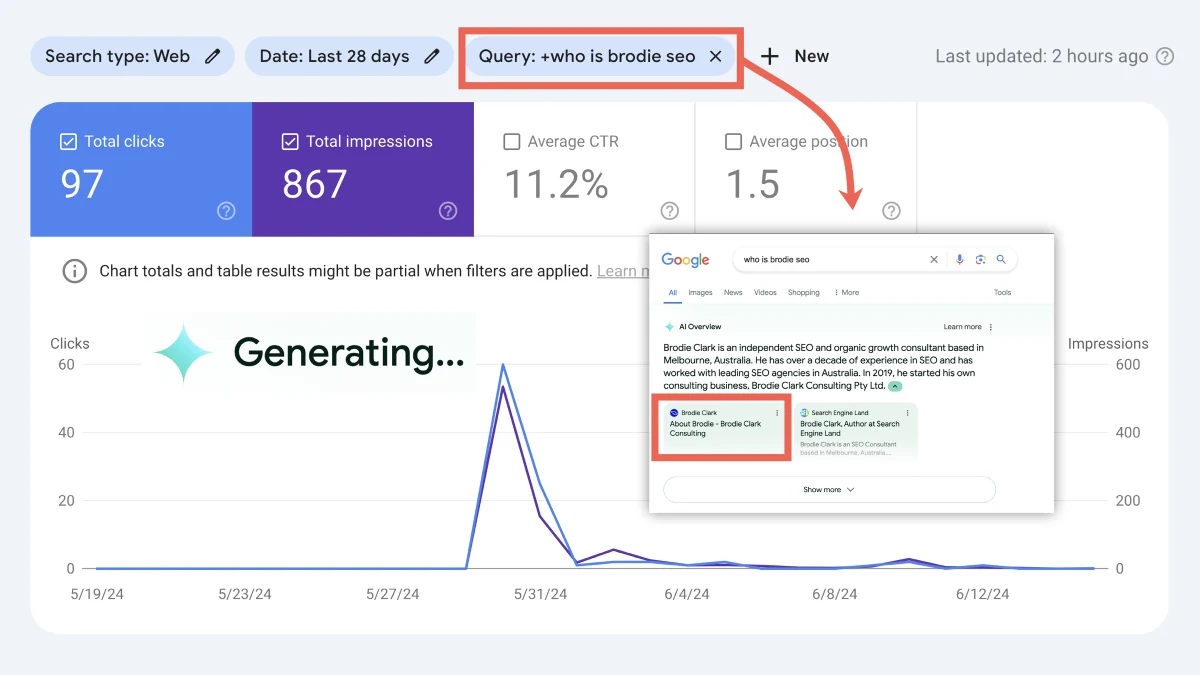
Lower overall click-through rates do not mean AI visibility has no value.
Research from Seer Interactive has shown that pages or brands cited within AI
Overviews can receive significantly stronger click-through rates than businesses that appear in search results but are not cited. Its 2026 analysis found that AI Overview citations remained an important differentiator even while overall CTR was being compressed.
This creates a new SEO objective.
You do not only want to rank.
You also want your content to be clear, relevant, trustworthy, and useful enough to become a source that search systems can reference.
That is part of what businesses often mean when discussing AI SEO or AIO optimization.
The goal is not to write content specifically for a robot.
The goal is to make information easy for both people and search systems to understand.
AI Overviews are moving beyond basic informational searches
AI Overviews were initially most closely associated with informational questions.
That is changing.
A 2026 Semrush analysis of more than 600,000 keywords found substantial growth in AI Overviews appearing for commercial-intent searches. The study found that AI Overview appearances for commercial queries increased by an average of 71% during the analyzed six-month period.
This matters because commercial searches are closer to a purchase decision.
Someone may search:
"best plumber near me"
"SEO company for local businesses"
"garage door repair company"
"best air duct cleaning service"
If AI features increasingly appear around these types of searches, the impact extends beyond informational blog traffic.
Businesses need to consider how AI search affects service pages, comparison pages, local SEO, advertising, and reputation signals as well.
Local SEO still matters in an AI-driven search environment
AI Overviews have not removed the importance of local SEO.
For local businesses across the USA, your Google Business Profile, service information, location relevance, reviews, website, and NAP consistency still help establish who you are and where you operate.
NAP refers to your business name, address, and phone number.
Keeping these details accurate across your website, Google Business Profile, and important directories reduces confusion and helps customers identify the correct business.
Your GBP also gives searchers another way to evaluate your company.
Regular GBP posts can show recent updates, services, promotions, or helpful information. Customer reviews provide social proof that can influence someone who sees your business through organic results, an AI-generated answer, Google Maps, or Google Local Services Ads.
SEO is becoming less about one isolated ranking and more about maintaining a strong presence across the places where people research your business.
Google reviews can influence what happens after discovery
Get Free SEO Audit
AI search may change how someone discovers your company, but reputation still influences what happens next.
A person might first encounter your business through an AI Overview.
Then they may search your brand name.
Next, they may review your Google Business Profile, ratings, website, services, and recent customer feedback before contacting you.
This makes encouraging legitimate Google reviews part of a broader search strategy.
Reviews can support trust, improve your Google Business Profile, provide recent information about customer experiences, and help potential customers compare businesses.
However, businesses should focus on authentic reviews rather than trying to manipulate ratings or generate artificial feedback.
AI visibility may bring attention to your company, but trust still has to support the final decision.
How AI Overviews affect SEO metrics
Some SEO reports may look confusing if you do not account for changes in search behavior.
Impressions may stay strong while clicks decline
You may notice that a page is still appearing frequently in Google Search, but fewer people are visiting it.
That can happen when an AI Overview answers enough of the user's question that clicking becomes optional.
This often produces a pattern where:
Impressions remain stable.
Average rankings remain similar.
Clicks decrease.
Click-through rate falls.
That pattern is important to investigate rather than immediately assuming the site has lost rankings.
Traffic may become more qualified
Lower traffic does not always mean lower business value.
People who receive a basic answer directly from Google may never need to visit your website.
The users who do click may have a stronger reason to continue researching.
For example, someone reading a simple definition may stay on Google.
Someone who needs pricing, service availability, professional advice, a local provider, or detailed instructions may still visit the source.
That means businesses should pay more attention to what happens after the click.
Metrics such as leads, calls, bookings, quote requests, purchases, and revenue can become more important than raw organic sessions.
Google now provides generative AI reporting in Search Console
Measuring AI visibility has historically been difficult.
Google made an important change in 2026.
As of August 31, 2026, Google says its Generative AI performance report has been rolled out to websites worldwide. The report provides information about impressions coming from generative AI features in Google Search, including AI Overviews and AI Mode.
Website owners can use the report to evaluate:
Generative AI impressions over time
Pages receiving AI-generated search visibility
Device differences
Country-level performance
Google also introduced controls that allow eligible website owners to manage whether their content can appear in generative AI Search features.
These tools give SEO teams more information than they previously had when trying to understand how AI search affects visibility.
What SEO metrics should you monitor now?
Get Free SEO Audit
Organic traffic remains important, but it should not be the only metric you evaluate.
A useful AI-era SEO dashboard may include:
Metric | Why It Matters |
Organic clicks | Shows actual website visits from search |
Organic impressions | Shows how often your pages appear |
Click-through rate | Helps identify changes in search behavior |
Average position | Shows traditional organic ranking visibility |
Generative AI impressions | Shows visibility in Google's AI search features |
Conversions | Measures leads, calls, sales, or bookings |
Branded searches | Can indicate growing awareness |
GBP interactions | Helps measure local discovery |
Google reviews | Supports reputation and customer decisions |
Local rankings | Tracks visibility for geographic searches |
You should look for relationships between these metrics rather than treating one number as the entire SEO result.
If rankings and impressions remain stable while CTR falls, AI-generated results or other SERP features may be influencing search behavior.
How should content change for AI Overviews?
Good AI SEO does not require completely rewriting everything on your website.
It does require clearer content.
Answer the main question directly
Users should not have to read several paragraphs before finding the basic answer.
If the section asks:
"How much does pressure washing cost?"
the first paragraph should provide a useful answer or explain the main factors affecting cost.
You can then expand with details.
This makes the content easier for users to scan and easier for search systems to understand.
Use descriptive headings
Headings should tell the reader what the section actually explains.
A heading such as "How Google AI Overviews Affect Organic CTR" is more useful than something vague such as "What This Means."
Clear headings improve page structure and give individual sections stronger context.
Cover related questions thoroughly
Strong topical coverage helps search engines understand the subject.
An article about local SEO, for example, might naturally discuss Google Business Profile optimization, NAP consistency, Google reviews, local citations, service areas, location pages, and local search intent.
That does not mean forcing every related keyword into the page.
Each section should exist because it helps answer something the reader is likely to need.
Make important facts easy to verify
Statistics, definitions, legal guidance, research findings, and other factual claims should come from reliable sources.
Clear sourcing improves trust and makes it easier for readers to verify what you are saying.
It can also strengthen the overall quality of content that search and AI systems evaluate.
Your SEO strategy should include more than informational blogs
One possible response to declining informational clicks is to focus more heavily on content that supports actual business decisions.
That can include:
Service pages
Location pages
Pricing information
Comparison content
Case studies
Original research
FAQs based on real customer questions
Product or service guides
Local information
First-hand business expertise
Informational content still matters because it builds topical relevance and reaches users earlier in their research.
But a website should not depend entirely on generic questions that Google can answer in a few sentences.
Pages that provide unique information, firsthand experience, specific data, tools, detailed services, or a reason to contact the company are harder to replace with a basic AI summary.
Local SEO, AI SEO, and paid marketing can support each other
SEO does not need to carry the full customer acquisition strategy alone.
A business might use AI SEO to improve visibility in generative search experiences while continuing to strengthen traditional local SEO.
Google Local Services Ads can help capture people actively searching for eligible local services.
Meta Ads can reach audiences who may not currently be searching.
GBP posts can keep your local profile active with relevant updates.
Google reviews can reinforce trust.
NAP consistency helps maintain accurate business information across important platforms.
Each channel has a different role.
A user might discover your company through an AI Overview, later see a Meta Ad, search your brand on Google, read your reviews, visit your website, and finally call.
Attributing that customer entirely to one channel can miss how modern search behavior actually works.
How to respond if your SEO traffic is declining
Do not immediately assume AI Overviews are responsible.
Traffic can fall because of ranking changes, technical SEO issues, seasonality, competition, demand changes, indexing problems, algorithm updates, or changes in search features.
Google's own Search Console documentation recommends investigating traffic drops using impressions, clicks, rankings, pages, queries, and other performance information rather than relying on a single metric.
Start with your Search Console data.
Compare periods and look at:
Which pages lost clicks?
Did impressions also decline?
Did average positions change?
Which queries were affected?
Did CTR fall even though rankings stayed similar?
Are affected keywords triggering AI Overviews?
Are your pages appearing in generative AI search?
This helps separate an SEO ranking problem from a click-through-rate problem.
If your rankings are stable but CTR is falling for queries that frequently show AI Overviews, the search results themselves may be influencing traffic.
If rankings and impressions are also falling, you probably have a broader SEO issue that needs investigation.
Adjust your SEO goals instead of abandoning SEO
Businesses sometimes see declining organic traffic and conclude that SEO is becoming irrelevant.
The evidence points to a more complicated change.
Google itself says AI Overviews now have more than 2.5 billion monthly active users, while AI Mode has passed one billion monthly users.
People are still searching.
The format of search is changing.
SEO strategies need to account for visibility inside AI-generated results as well as traditional organic listings.
Your goals can therefore expand from:
"Get more organic traffic."
to:
"Increase qualified search visibility and conversions."
That can include traditional rankings, AI Overview citations, generative AI impressions, Google Business Profile visibility, branded search demand, leads, and revenue.
If your company is currently measuring SEO mainly through rankings and total organic sessions, this is a good time to review the reporting model. Compare CTR, conversions, generative AI impressions, GBP performance, and branded demand alongside traditional traffic before deciding whether SEO performance has actually improved or declined.
SEO traffic is changing, not disappearing
AI Overviews can reduce clicks to traditional organic results, particularly for informational searches where Google can provide a useful answer directly on the results page.
That makes organic traffic harder to predict from rankings alone.
At the same time, AI Overviews create another type of visibility. Businesses whose content is cited inside AI-generated answers can appear at an important stage of the user's research process.
For companies across the USA, the practical response is not to abandon SEO.
It is to improve how SEO is measured and how content is created.
Your website should answer questions clearly, demonstrate real expertise, support local search visibility, maintain accurate business information, encourage authentic Google reviews, and provide useful information that goes beyond what a short AI response can easily reproduce.
Paid channels such as Google LSA and Meta Ads can support that strategy when appropriate, while Google Business Profile activity, NAP consistency, local SEO, and AI SEO strengthen your broader search presence.
Search traffic may not behave exactly as it did before AI Overviews.
The businesses that adapt their content and measurement to the new search environment will have a much clearer picture of what SEO is actually contributing.
Frequently Asked Questions
Can you opt out of appearing in Google AI Overviews?
Google introduced a Search generative AI control in Search Console that allows website owners to manage whether their content can be included in supported generative AI features such as AI Overviews and AI Mode. Excluding content can also mean giving up the opportunity to receive visibility and links from those experiences.
Does a click from an AI Overview count in Google Search Console?
Yes. Google states that when someone clicks an external website link within an AI Overview, that action counts as a click in Search Console. Standard impression rules also apply to links shown within AI Overviews.
Do AI Overviews affect paid Google Ads?
They can change the overall search results layout and user behavior. Recent research has also found that AI Overviews increasingly appear on search result pages alongside Google Ads, particularly for commercial-intent searches.
Should older blog posts be updated for AI search?
Older content should be reviewed when it contains outdated information, unclear answers, weak structure, missing sources, or sections that no longer match search intent. Updating content purely to insert AI-related keywords is unlikely to improve its usefulness. The focus should remain on accuracy, clarity, topical depth, and user intent.
Will AI Overviews eventually replace normal Google results?
Google currently presents generative AI features alongside other search formats rather than describing them as a complete replacement for traditional results. Websites can still receive clicks and impressions through standard listings, AI Overviews, AI Mode, and other Google Search features. The mix is continuing to evolve.